From Consultation to Action
Before SaskForward advocated for a single policy position, it asked a question. That sequence shaped everything that followed.
Before SaskForward advocated for a single policy position, it asked a question. In 2017, the coalition invited people across Saskatchewan to answer: what transformational change would you introduce to make this province happier, healthier, and more prosperous for all? That sequence, question before position, shaped everything that followed.
Public consultation is sometimes treated as a formality, a box governments and organizations check before announcing a decision they had already made. SaskForward’s approach reversed that order, using the consultation itself as the foundation for its subsequent advocacy, rather than as a symbolic gesture layered on top of a predetermined platform.
Why the question mattered more than a survey
Rather than presenting residents with a pre-set list of policy options to rank or approve, SaskForward’s consultation posed an open-ended question, giving people room to describe the change they actually wanted to see in their own words, rather than selecting from a menu shaped by someone else’s assumptions about what mattered.
This approach surfaces different information than a closed-ended survey. It reveals not just which pre-selected options are popular, but what people are actually thinking about, worrying about, and hoping for, unconstrained by a list of choices that might miss their real priorities entirely. The responses SaskForward received, spanning health care, education, taxation, and public services, reflected genuine breadth of concern rather than confirmation of a predetermined agenda.
From individual voices to a collective pattern
An individual response to a consultation question carries limited weight on its own. What gives consultation-based organizing its power is the process of aggregating thousands of individual responses and identifying the patterns that emerge, patterns that no single respondent could have articulated alone, but that become undeniable once the full scope of public sentiment is visible.
SaskForward’s consultation revealed a consistent, widespread desire to protect public services and pursue fairer revenue options rather than accept austerity as inevitable. No individual respondent invented that pattern. It emerged from the collective weight of thousands of people describing, independently, similar priorities and similar concerns.
We asked people to answer the question, “What transformational change would you introduce to make Saskatchewan a happier, healthier, and more prosperous place for all?”
Turning consultation results into public pressure
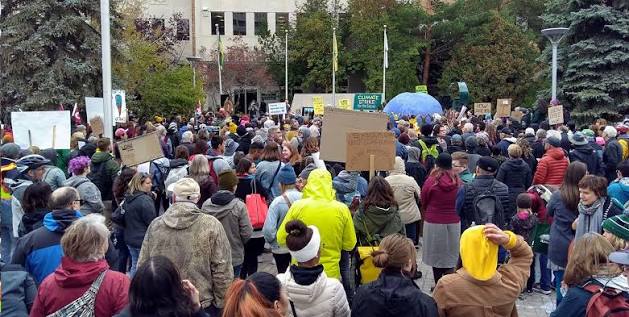
Gathering public input is only the first step. Translating that input into meaningful pressure on government decision-making requires making the results visible and difficult to ignore, through public reporting, media engagement, and direct communication with elected officials and department decision-makers.
SaskForward published its consultation findings and used them directly to challenge the government’s 2017 budget decisions, pointing specifically to the gap between what residents said they wanted and what the budget actually delivered. This created a clear, evidence-based contrast that was harder for the government to dismiss than a purely values-based critique would have been on its own.
The limits of consultation without follow-through
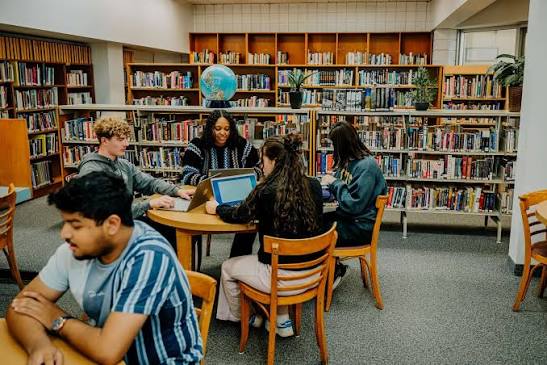
Consultation-based organizing carries an inherent risk: if a government can absorb public input, acknowledge it politely, and then proceed largely unchanged, the consultation process risks becoming exactly the kind of empty formality it was designed to avoid. SaskForward’s experience with the 2017 budget illustrates both the power and the limits of this approach. Sustained public pressure did force some reversals, on library funding and grants-in-lieu specifically, but many of the underlying budget choices remained in place despite clear public opposition.
This mixed outcome does not invalidate the consultation approach. It highlights that consultation is most effective as one component of a broader organizing strategy, one that also includes sustained public communication, media engagement, and direct political pressure, rather than a standalone tool expected to produce policy change on its own.
Consultation as an ongoing practice, not a one-time event
The most durable version of consultation-based organizing treats public input gathering as an ongoing practice rather than a single event tied to one specific budget cycle. Priorities shift over time, new challenges emerge, and a coalition that continues to check in with the public it represents remains better positioned to advocate effectively as circumstances change.
SaskForward’s continued work in the years since 2017 reflects this understanding, maintaining its role as a channel for public input on provincial priorities rather than treating its founding consultation as a one-time exercise whose findings become increasingly dated with each passing year.
What this model offers other movements
Organizations and coalitions working on other issues, in Saskatchewan and beyond, can draw a clear lesson from SaskForward’s approach: genuine, open-ended public consultation, conducted before positions are finalized rather than after, produces advocacy that is more representative, more credible, and ultimately more resilient to the accusation that a coalition speaks only for a narrow group of activists rather than the broader public.
Everyday voices, gathered systematically and taken seriously, remain one of the most powerful tools available for shaping policy in a way that reflects what people actually need, rather than what policymakers assume they need on their behalf.
Why did SaskForward ask an open-ended question instead of a survey?
An open-ended question lets people describe priorities in their own words, revealing what they actually think about rather than confirming a predetermined list of options shaped by someone else’s assumptions.
How does an individual response become a policy argument?
No single response carries much weight alone, but aggregating thousands of independent responses reveals consistent patterns, such as a widespread desire to protect public services, that become difficult to dismiss.
Did the consultation actually change government decisions?
It contributed to partial reversals on library funding and grants-in-lieu, but many underlying 2017 budget decisions remained in place, showing consultation works best alongside sustained pressure, not as a standalone tool.
Is consultation a one-time exercise or an ongoing practice?
SaskForward treats it as ongoing, since priorities shift over time and a coalition that keeps checking in with the public it represents stays better positioned to advocate as circumstances change.
What can other advocacy groups learn from this model?
Conducting genuine, open-ended consultation before finalizing a position produces advocacy that is more representative and credible than announcing a platform and seeking endorsement afterward.