Corporate Tax Breaks vs. Public Investment
Every budget is a statement of priorities disguised as a spreadsheet. Protecting corporate tax advantages while cutting services is a choice, not a fiscal law of nature.
Every budget is a statement of priorities disguised as a spreadsheet. When a province chooses to preserve corporate tax advantages while trimming the programs ordinary families rely on, it is not simply balancing books. It is deciding, quietly and without a public vote, whose needs come first.
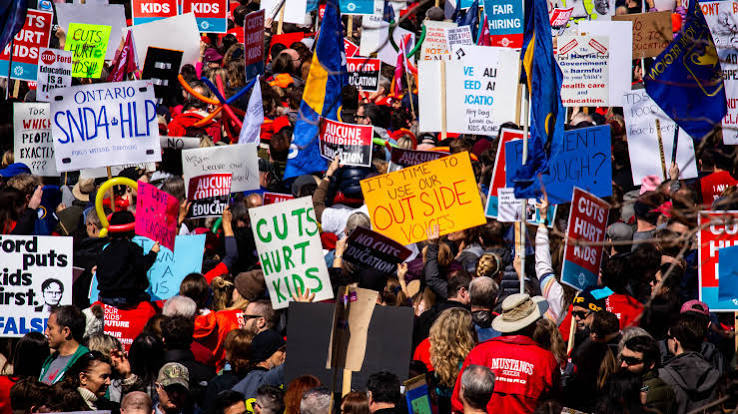
Saskatchewan’s 2017 budget made that choice plainly. Deep cuts landed on libraries, social programs, and municipal funding, while the province’s corporate tax structure remained largely untouched. Understanding why that matters requires looking at what corporate tax relief actually does, who benefits from it, and what is given up when it is protected at the expense of public investment.
What corporate tax competitiveness actually means
Governments that maintain low corporate tax rates typically justify the choice on competitiveness grounds: keep taxes low, and businesses will invest, create jobs, and generate economic activity that eventually benefits everyone. This argument has real substance in some contexts, particularly for small and medium-sized businesses operating on thin margins in competitive markets.
But competitiveness arguments are often applied uniformly, treating a small local business the same way as a large, highly profitable corporation extracting a fixed, immobile resource like potash or oil. A resource company cannot relocate the resource itself to a lower-tax jurisdiction. Its profitability is tied to Saskatchewan’s geology, infrastructure, and workforce, not solely to its tax rate. Treating every corporate taxpayer as equally mobile and equally price-sensitive flattens an important distinction that matters enormously for how a province should think about its tax policy.
What public investment returns
Public investment in libraries, health care, education, and social supports is often framed as a cost rather than an investment, but the framing obscures what these programs actually produce. An educated, healthy workforce is more productive. Accessible libraries support literacy, digital access, and small business research. Strong social supports reduce downstream costs in emergency health care, criminal justice, and lost economic productivity.
These returns are harder to quantify in a single fiscal year than a corporate tax rate is, which is part of why they are so easy to deprioritize in budget negotiations. A tax break shows up immediately on a corporate balance sheet. The benefits of a well-funded library system or an accessible health clinic accumulate slowly, across years and across an entire community, in ways that rarely make it into a single line item.
The 2017 trade-off in plain terms
During SaskForward’s 2017 consultation, respondents were clear that they wanted the province to look at more balanced corporate and business taxation as part of any deficit response. That request reflected a straightforward observation: if the province was going to ask residents to accept real sacrifices, from library closures to reduced municipal funding, it seemed reasonable to ask whether corporations, particularly the most profitable ones, might also be asked to contribute more.
The government’s decision not to pursue that path was itself a form of public investment, just directed differently than most residents had asked for. It was an investment in maintaining Saskatchewan’s existing corporate tax advantage, funded indirectly by cuts to the services many of those same residents depended on.
As our consultation clearly demonstrated, there is another way.
Weighing mobility against loyalty
A recurring argument against raising corporate taxes is the fear that businesses will simply leave for a lower-tax jurisdiction. This fear deserves to be taken seriously for genuinely mobile industries, but it should not be treated as an absolute law that applies equally to every sector.
Resource extraction companies, agricultural processors, and businesses built around Saskatchewan’s specific infrastructure and supply chains have strong practical reasons to remain in the province even with a modestly higher tax rate. The relevant policy question is not whether any tax increase would cause any business anywhere to reconsider its location, but whether a carefully calibrated, sector-aware adjustment could raise meaningful new revenue without triggering the kind of capital flight that blanket corporate tax hikes are sometimes assumed to cause.
What a rebalanced budget could fund
A modest, well-designed increase in corporate tax revenue, even one that kept Saskatchewan broadly competitive with neighbouring provinces, could fund a meaningful share of the public investments cut in 2017 and the years since. It could restore library hours, stabilize grants-in-lieu for municipalities, and reduce the pressure to expand regressive consumption taxes that fall hardest on lower-income households.
None of this requires an extreme or punitive approach to corporate taxation. It requires a willingness to treat corporate contribution as one legitimate tool among several for funding public investment, rather than a fixed constraint that public services must always be adjusted around.
Reframing the choice
The debate over corporate tax rates is often presented as a binary: either taxes stay low and the economy thrives, or taxes rise and businesses flee. Saskatchewan’s real experience with budgeting suggests a more complicated picture, one where the actual choice being made in every budget is about priorities, not inevitabilities.
Protecting corporate tax advantages while cutting public investment is a decision, not a fiscal law of nature. Recognizing it as a decision is the first step toward asking Saskatchewan’s government to make a different one, and toward building the public pressure needed to ensure that the next budget cycle treats corporate contribution and public investment as two sides of the same, shared responsibility.
Why do governments keep corporate tax rates low?
Governments often argue that low corporate tax rates attract investment and keep businesses from relocating. This argument holds real weight for mobile, price-sensitive industries, but is often applied uniformly even to less mobile sectors.
Are resource companies likely to leave if taxes rise slightly?
Resource extraction companies are tied to Saskatchewan’s geology and infrastructure and cannot relocate the resource itself. This makes them less price-sensitive to modest tax changes than more mobile industries.
What did the 2017 consultation say about corporate taxation?
Respondents called for more balanced corporate and business taxation as part of the province’s deficit response, alongside a more progressive income tax system, rather than relying solely on service cuts.
How does public investment “pay off” compared to a tax break?
Public investment in health, education, and libraries produces returns like a more productive workforce and reduced downstream costs, but these benefits accumulate slowly and are harder to quantify than an immediate corporate tax saving.
Could a rebalanced budget restore services cut in 2017?
A modest, well-designed increase in corporate tax revenue could fund a meaningful share of the services cut since 2017, including library hours and municipal grants-in-lieu, without requiring an extreme approach to taxation.